



Not too long ago, while visiting a winery with a small group of friends, I was summoned to uncork a bottle of sparkling wine — with a saber.
Though unpracticed in this legendary French technique, I gave it a whirl, miming a few strikes in rehearsal before the big moment. Holding the bottle high and pointed away from everyone, I struck its neck with the sword. Nothing. On my second attempt, the cork popped into the air, inspiring cheers and, well, admiration.
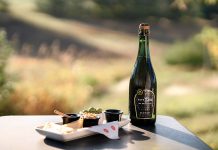
This technique may have been practical for Napoleon’s officers, but it’s not one I’d recommend trying at home. Instead, the proper (and perhaps easier) way to open a bottle of sparkling Michigan wine is to remove the foil, loosen the wire cage, and angle the bottle away from everyone. While keeping one hand on the cork, twist the bottom of the bottle with your other hand. Let the cork release slowly.
This is one of numerous tips about wine you can learn from educators at a Michigan tasting room.
For many customers about to head home with a case of wine, storage is often the most pressing concern. Storage for most types of wine is the same. The ideal temperature is 50 to 55 degrees Fahrenheit. Generally, you want to store wine in a temperature-consistent room with some humidity and little to no light. Bottles with corks should be stored on their sides or upside down to keep the corks wet to prevent oxidation.
“That’s why most people store their wine in the basement, because it’s below the frost line and fluctuation in temperature is rare,” says Brian Lillie, vice president of hospitality operations and distribution at Chateau Chantal on the Old Mission Peninsula.
Pairing is also a common concern. Which foods go best with that Michigan Riesling? Or that Michigan Pinot Noir?
“What grows together goes together,” says Lillie, who also teaches food and wine classes at Northwestern Michigan College in Traverse City.
He suggests pairing a Michigan Pinot Noir with morel mushrooms, or a Michigan Riesling with produce from a local farmers market. Both options, he says, are fantastic.
There are, of course, general pairing rules:
- Red wines with red meat.
- White wines with white meat, seafood, and vegetables.
- Sweet wines with desserts.
- Low-tannin wines such as Pinot Noir or Gamay with salmon.

Photograph from Adobe Stock
One warning: Don’t pair high-alcohol wines with spicy foods. Those wines intensify the heat. Better to choose a semidry or lighter red.
As far as glassware, use a larger glass for reds and a smaller glass for whites. Large glasses allow red wines to open up, releasing flavors and aromas. Smaller glasses help maintain the chilled temperatures of white wines.
How long do wines last after you open a bottle? In most cases, you’ll find a difference in flavor and aroma from day to day. Opened reds should be stored in a cool, dark place or in the fridge. Whites should be refrigerated. The wine will “go south” in a few days and should be tossed after seven days, Lillie says.
The hardest question to answer for any wine educator: Which wine should I buy my friend? “My best answer is to always buy your friend something you’d like to share with them,” Lillie says. “If they don’t like it, you can always drink the rest.”
Greg Tasker works part time as a wine educator on the Leelanau Peninsula. He has written about Michigan’s wine industry for The Detroit News, Michigan Blue, and other publications.






Facebook Comments